
3, 2, 1 Piñata!: The Card Game With Hidden Math for Kids 7 and Up

Picture this:
Your daughter has four Candy Cards. Her brother also has four. He knows that if she lands on exactly 0 or 10 on her turn, she wins the whole game. But if he can do the same, he wins.
The count sits at 4. He looks at his hand trying to figure out what to play. The table goes quiet in that specific way it only does when real stakes are on the line…you know, like gummy bears. He decides to play a +3 card to move the count to 7. Too bad. It's her turn now and she has a +3 card also and wins the game. Cheers and moans are heard at the same time and an immediate rematch request comes from the brother.
That's a normal Tuesday with the card game I created called 3, 2, 1 Piñata! It plays fast, it's a little vicious but in a friendly way, and somehow, before anyone notices, an entertaining forty-five minutes flew by in several 15-minute play throughs. This is why 3, 2, 1 Piñata! tends to outlast the other "educational" games in the closet: nobody at that table is thinking about what they're learning. They're thinking about winning (and, let's face it, candy).
That's the sweet spot (no pun intended) that 3, 2, 1 Piñata! lives in.
Family fun using some basic addition and subtraction
This is a fast-paced, candy-stealing card game built around a simple idea: a “count” that has to stay between 0 and 10 (more on this later). There's no lecture, no workbook feeling. It's a gameplay mechanic that’s simply part of the game.
Even though you're adding or subtracting, kids are generally more focused on how to score and what cards they would need in order to do that. When you have the right combination of cards, scoring candy is genuinely fun. Plus, with other cards in the deck that allow you to steal or sabotage opponents, the game expands from addition and subtraction to mischievous candy stealing moments from your kids, especially when they can yank a hard-earned card right out of their parents' pile.
The Hidden Math Built Into Every Round
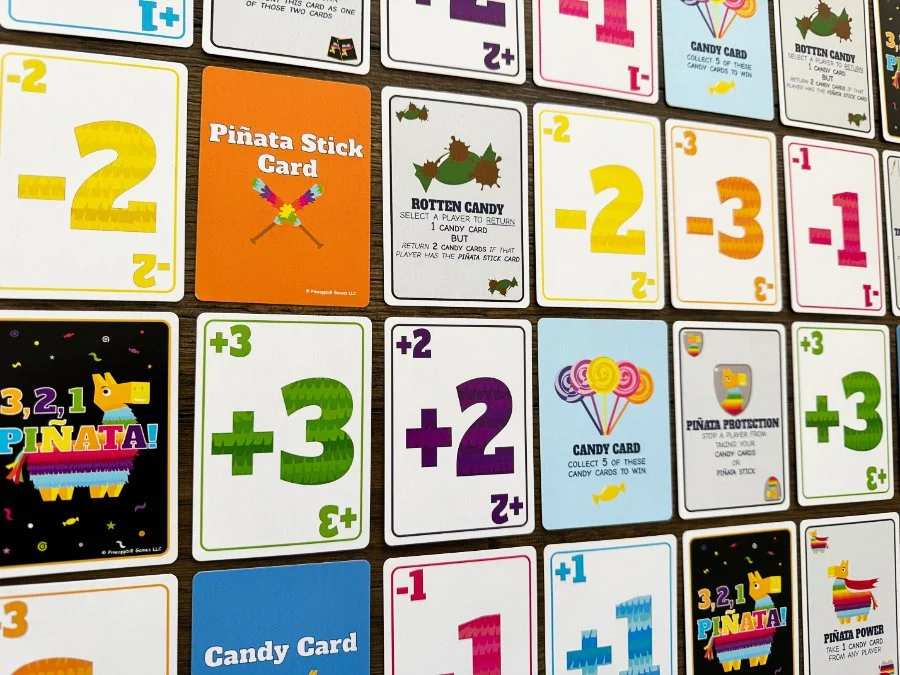
Here's the part most players don't realize until a few turns in: almost every single move is addition or subtraction, happening in real time. The arithmetic is simple, too. Cards range from -3 to +3 with the occasional "wild card" of a +4 or -4.
Kids aren't doing problems on a page. They're doing it in their head (or on their fingers) and it gets their brains moving. They're tracking a number, deciding which direction to move "the count", and seeing the results of their move, and watching what happens when it's other players' turn.
When a card is played, players must state what the new "count" is based on the card that was played. For example, if the count was at 5 and they play a +3 card, they must say the new sum aloud. In this case, they'd say 8. Then play continues to the next player. It's the same mental math a kid uses counting pocket change or figuring out how many table place settings they'll need at the table if their aunt and uncle suddenly drop by. In the game, the addition and subtraction comes with fun "gotcha" moments, suspicious glances, and the occasional candy heist with no mercy (take my word for it, kids really like taking candy cards from their parents).
It's the kind of game where a parent can feel good about what's quietly happening under the hood, without ever having to say "you’re learning something”.
In fact, you can get a feel for the game with our free 2-player print and play demo.
How to Play 3, 2, 1 Piñata!
Every game starts with a shared "count" that always starts at 5. The "count" has to stay between 0 and 10 and can never exceed these limits. On your turn, you play a Count Card that'll move the count up or down.
Land the count exactly on 0 or 10, and you score a Candy Card. First player to collect 5 Candy Cards wins. But the twist is that the count is shared, so if a player isn't careful and "thinking though", they may inadvertently setup someone else to score instead.
On top of all that, there are a handful of special cards turn it into something closer to organized chaos:
The Piñata Stick Card — doubles your candy scored when that player lands on 0 or 10. Oftentimes, this card makes the holder the table's most-wanted target as their candy pile racks up. The catch to this card is that the possessor can also lose double the candy. This is a great card for young kids to start out with.
Piñata Power (take/steal Candy) — lets you steal a candy card from any opponent's stash.
Rotten Candy (sabotage) — drops a little chaos into someone else's plans by forcing them to return a candy card back into the deck
Piñata Protection (block an opponent's action against you) — shields your hard-won candy from getting stolen or stops someone from taking the Piñata Stick Card if you have it
Play Any Two Cards — A handy card to let you play any 2 cards for a powerful combination. Best part, that card itself doesn't count as one of those 2 cards
+/-4 or Take Stick Card - This allows kids to choose (or any player for that matter). Play that card as either a +4 or -4, or take the piñata stick from the player who has it. It's a great way to introduce some mild strategy to kids and let them decide how best to use this card depending on where things stand in the game.
In 3, 2, 1 Piñata!, games generally play fast with most games wrapping up in about 15 minutes which means "one more round" is a very real threat to bedtime.
Why It Works for Family Game Night
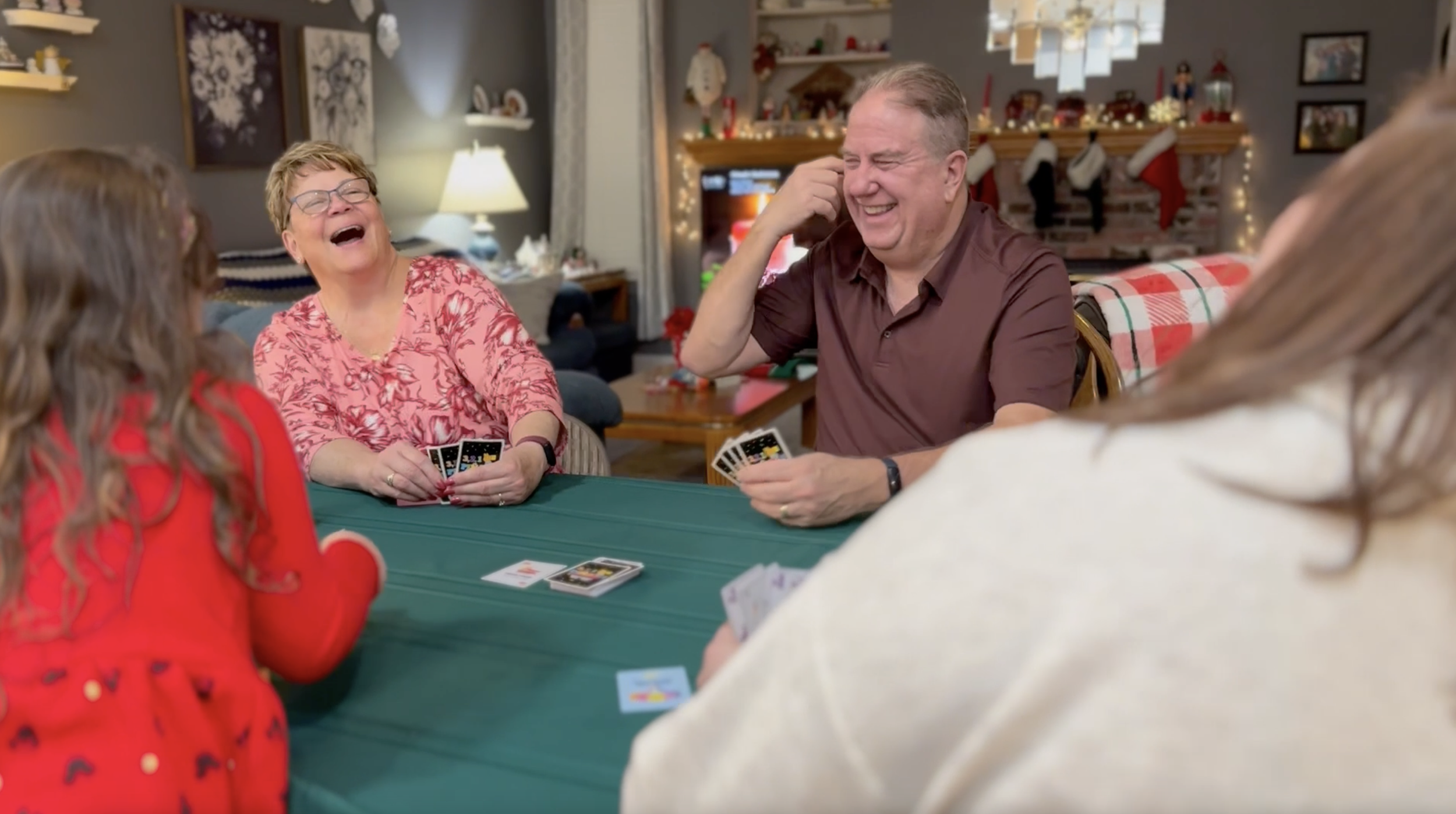
A few reasons this one tends to earn a spot in the game drawer:
It's genuinely fast. ~15 minutes means it fits before dinner, after dinner, or anytime you're waiting for something (think restaurants, airports/airplanes, etc.)
It scales with your table. 2–5 players means it works for a quiet two-person rainy afternoon or a full family pile-on.
It travels. The pocket box is compact and weighs about 7 oz., so it's an easy add to a backpack, glovebox, or carry-on.
It's built for ages 7 and up. There's enough light strategy that older kids and adults stay engaged too. Nobody's just along for the ride.
The chaos is the point. Stealing, blocking, and the occasional Piñata Stick gamble keep every round a little unpredictable, which is exactly what keeps kids leaning in instead of checking out.
My favorite gameplay moments are from watching kids play the game with their parents. One fun example I like is when the parents see their child play a card that they don't think is the best move. They'll make a suggestion and ask "are you sure you want to play that card?". The child nods they do and often the parents will sort of sigh and let it go. Gameplay continues and when it's that same child's turn once again, they dish out some type of move, whether it's a steal card or some combination of cards and totally upend the game. Parents will usually laugh and confront their child with a silly, "You knew exactly what you were doing, didn't you!"
In fact, Bill Ivie from EverythingBoardGames.com said the following in this review of 3, 2, 1 Piñata!: "It's a great game for families, particularly families of kids that are young enough to need some practice for early math skills...The extra action cards do a great job of keeping the game from simply being a lesson in card counting."
FAQs
Does 3, 2, 1 Piñata! have educational elements?
There's real addition and subtraction built into almost every turn. The thing is, it's a fun card game first and foremost. The learning is just along for the ride. If you found post this looking for a piñata card game with hidden math for kids 7 and up, you're in the right place!
How long does a game take?
Most games run about 15 minutes, which makes it easy to fit into game night without taking over the whole evening.
What ages is it good for?
It's designed for ages 7 and up, with enough back-and-forth strategy that older kids and adults stay engaged too.
How many players can play?
2 to 5 players.
Is there a way to try it before buying?
Yes. There's a free 2-player Print & Play demo version that you can print out the game at home and play it at the kitchen table before you buy it.
Do you have other fun things on this website for kids (and adults)?
Yes. In fact, I have a word search I created that is based on the card game. It's a tricky one where you have to find the word "CANDY" five times and the only letters in the word search grid are "C","A", "N", "D", and "Y". It takes a person maybe ~10 mins to complete.
Ready to Steal Some Candy?
So, will it be your kids fighting over the last Candy Card, or will it be you sneaking a steal in when nobody's paying attention? Either way, the count is waiting and the candy's not going to steal itself.
🛒 Grab it on Amazon - ships fast, so you'll have it before your next game night.
🖨️ Not sure yet? Download the free Print & Play demo and try it tonight before you commit.