
3, 2, 1 Piñata! House Rules: New Ways to Play

Every game table is a little different. Maybe it's just you and one other person on a slow Tuesday night, maybe it's a full house at a birthday party, maybe there's a six-year-old at the table who needs a little extra help playing the game, or maybe you want to add even more strategic depth to the game. The good news is that 3, 2, 1 Piñata! is a flexible card game. Here are four house rules I’ve created for matching the game to fit whatever's actually happening at your table.
Playing 3, 2, 1 Piñata! with 2 Players
Playing with More Than 5 Players (Just Add a Second Deck)
Playing with Younger Kids: Open-Hand Play
Card Combinations: The Game Changing Rule (← the biggest addition)
One of these rules, card combinations, has become such a popular addition (no pun intended) that it'll probably stick around for good.
Playing 3, 2, 1 Piñata! with 2 Players
First up, the 2 player game. The base game plays great with 2 to 5 people, but head-to-head games change the probability of a player winning the game in one specific way: the piñata stick card. As a quick reminder, the piñata stick card allows the person who possesses it to earn double the candy, but this person can also lose double the candy. In a 3+ player game, its advantage is about even statistically speaking (some of you may say “WHAT?! No way!”, but it’s true). However, in a 2-player game, whoever starts with the piñata stick card actually has a higher statistical chance of winning the game. To even this out, I’ve added this game setup change:
Assign It or Draw It
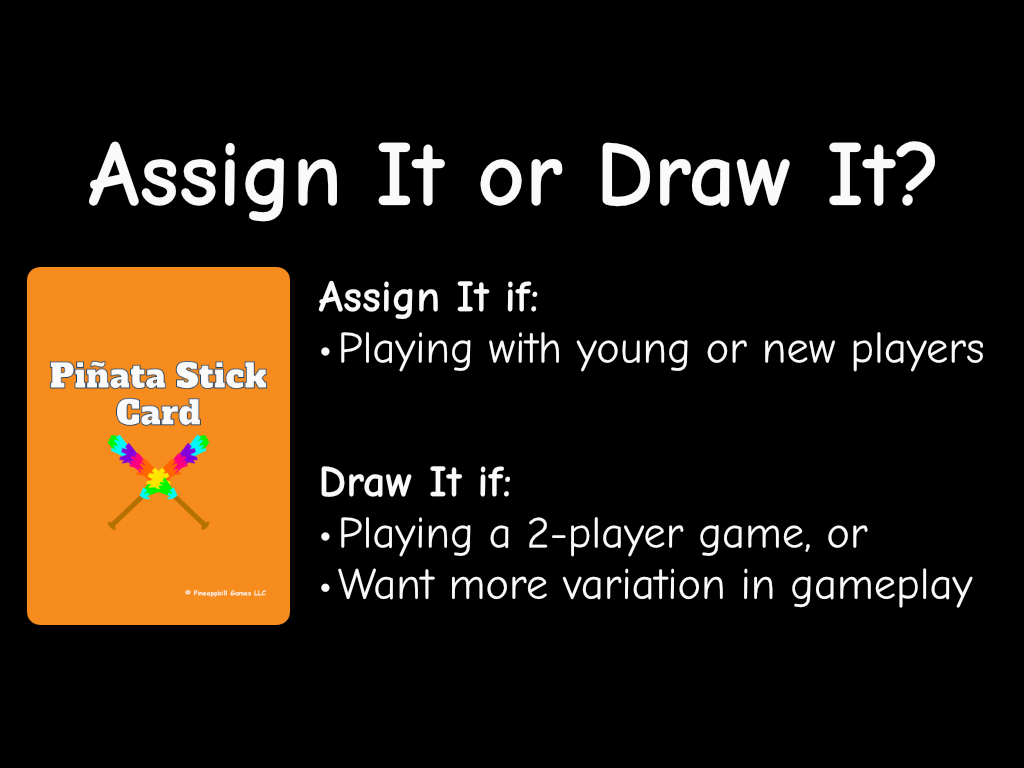
This is a small adjustment, not a new ruleset, and it works the same way whether you're playing with 2-players or with a full table of 5. Before the game starts, decide as a group:
Assign It (current rule) — the piñata stick card is pre-assigned, usually to the youngest player (or the group can decide on their own who gets it). Especially in a 1v1 game with an adult and child, this works well as a built-in handicap or if you've got a newer or younger player at the table going up against a more experienced one.
Draw It — leave the piñata stick card shuffled into the deck like any other card. Nobody knows who'll end up holding it until it shows up in someone's hand, which adds a nice bit of suspense to who gets the advantage and when in the game they get it. Sometimes it happens early, sometimes it happens later in the game. When a player draws this card from the deck, they should immediately place it down on the table in front of them (like normal since you don’t hold it with your other cards) and then draw another card.
By getting the piñata stick card in the middle of a game, its advantage is reduced just enough to make things more even. So, it's up to you. Pick whichever fits the matchup. If you want a competitive 2-player game between equally matched players? Draw it. Have a parent vs. kid game matchup? Assign it.
Playing with More Than 5 Players (Just Add a Second Deck)
I’ve had people ask me whether 3, 2, 1 Piñata! can stretch past the standard 5-player cap, and the answer is yes. You can grab a second copy of the deck and shuffle it in. The game doesn't need any rule changes to support a bigger table; the only real difference is pace. More players means more turns, so games naturally run longer. Most groups who've tried it say that trade-off is worth it for getting everyone at the table involved, especially for parties, large families, or a situation where you have more than 5 players who'd like to play.
Just try to avoid the “on my phone” in between turns trap because this will absolutely elongate a game and the “where are we at” question on every single turn (although I suppose that’s true for all games).
Playing with Younger Kids: Open-Hand Play
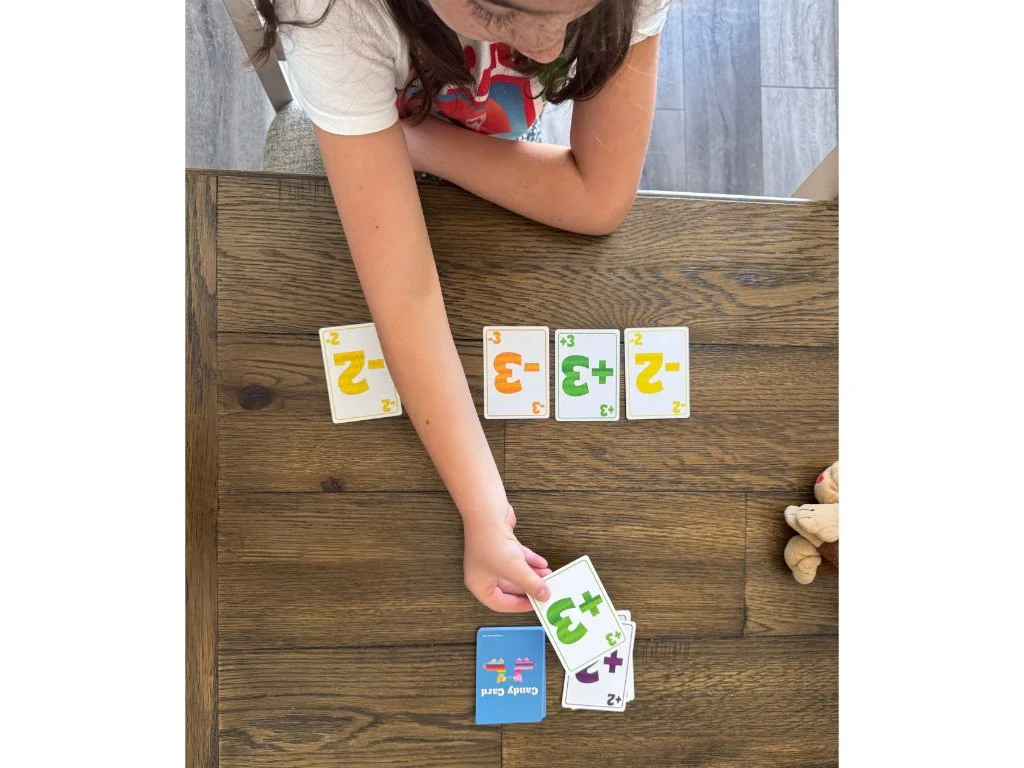
For families with younger kids still getting comfortable with the game, try playing with everyone's cards face-up on the table instead of hidden in hand.
This removes the "secret information" layer entirely. Kids can see exactly what cards everyone has, which makes it much easier for a parent to point out what a card will actually do to the count before it's played, or to help a kid spot a good moment to steal a candy. It's a small change, but it turns the game into much more of a shared, talk-it-through experience rather than something a younger player has to puzzle through alone.
This works well as a temporary "training-wheels" phase. Most families find their kids are ready to play with hidden hands again after a few open-hand rounds.
Card Combinations: The Game Changing Rule
This is the newest house rule, and it adds another fun layer of strategy for players who've got the base game down and want a little more to think about.
Here's an example. Say the count sits at 4. Before this rule, that was a pretty good "safe" spot, because there were only a handful of ways to score from this position. Now, holding the +3/+2/+1 combo, that same 4 becomes a straight shot to 10 which'll score you a candy card. Same goes with the count sitting at 6 and having a -3/-2/-1 combo as a straight shot to 0. Now that you have the gist, let's dive into the rule itself.
The rule: if a player is holding a combination of a +3, +2, and +1 cards or a -3, -2, and -1 cards, they can play all three of those cards in a single turn. The combined sum of those cards moves the count exactly as if you'd played a single card. Hold all three positive count cards, and you'll shift the count by +6 in one move. Hold all three negative count cards and the count goes down by -6 in one move. Playing this three-card combinations acts as your turn. No adjustment in combination is allowed (i.e., a -3, a +2, and -1 is not a valid combination).
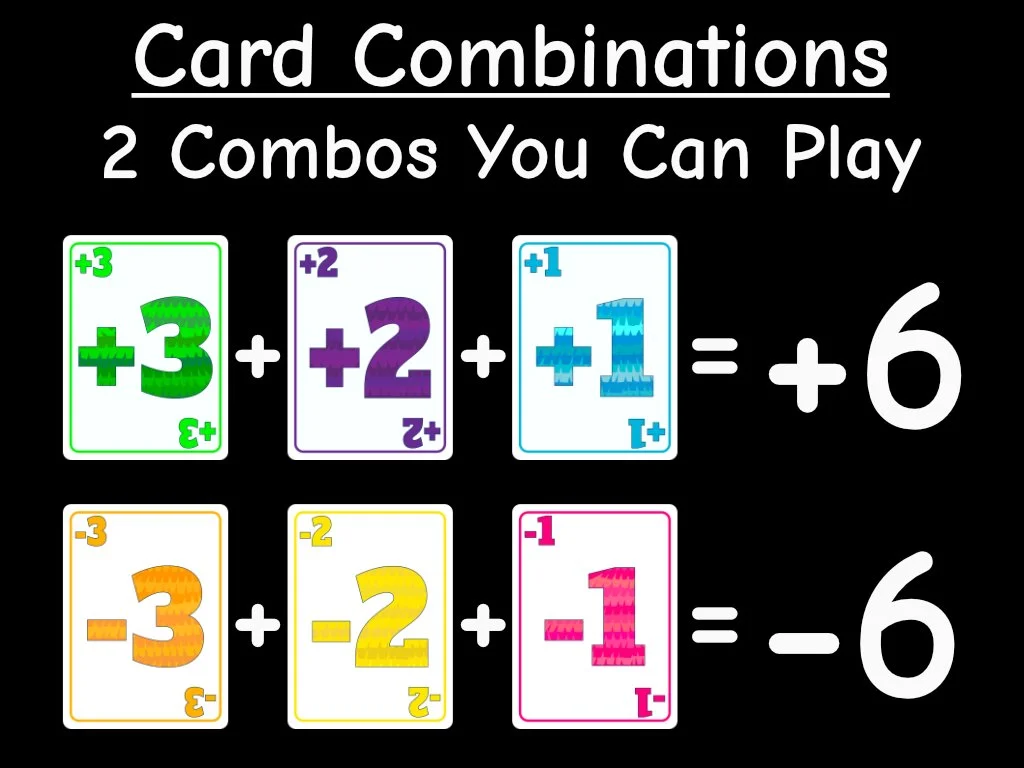
Manage your hand well, and you can see this combo come up more than once in a single game. Playing a combo is a big swing for a single turn, which means it opens up some real decision-making: do you hold those three combination of cards and wait for the perfect setup or play the cards as best you can to stay flexible?
This rule can reward players who find that the count seems to revolve around 4 and 6. There are now more ways to score candy and even fewer ways to “play it safe”.
Essentially, we've added an extra way to score with count cards. First, you have the standard, play a single count card to score option. Second, you have the Play Any Two Cards option to score candy which is a two card combination. And third, you now have the +/-3, +/-2, and +/-1 option to score candy. I guess that’s why I decided to call the game “3, 2, 1 Piñata!” (it’s not actually why I decided to call the game this, but hey, now I can say, “They don’t call it 3, 2, 1 Piñata! for nothing!").
Quick Recap (FAQ)
Can I play 3, 2, 1 Piñata! with just 2 players? Yes. The base game supports 2 to 5 players. The only house rule worth adding specifically for 2-player games is deciding whether to assign or draw the Piñata Stick card, since the advantage of pre-assigning favors the player who has it in head-to-head matchups.
Can more than 5 people play 3, 2, 1 Piñata! at once? Yes, by adding a second deck. No rule changes are needed. Just expect a longer playtime since more players means more turns.
Can younger kids play 3, 2, 1 Piñata!? Yes. The base game is built for ages 7 and up, and for younger or newer players, playing with all cards face-up (open-hand play) makes it easier for a parent to guide them through the gameplay.
Is there a "game changing" rule (no pun intended) in 3, 2, 1 Piñata!? Yes. The card combination rule lets players holding a +3/+2/+1 or -3/-2/-1 set play all three at once for a combined +6 or -6 move. It adds another layer of strategy for players who already know the base game well. Plus, it allows for less “safe spaces" for the count when this rule is implemented.
Try It at Your Table
None of these need anything extra to play (except for getting a second deck). It's the same base game with extra elements added to make the game even more fun. Grab your copy on Amazon, or try the free 2-player Print and Play demo if you want to test a variant before committing to a full game night.
🛒 Grab it on Amazon - ships fast, so you'll have it before your next game night.
🖨️ Not sure yet? Download the free Print & Play demo and try it tonight before you commit.